

New homeowners represent one of the most active consumer audiences in the market. After buying a home, most people immediately begin making decisions about maintenance, upgrades, protection, and long-term improvements. That is why businesses across insurance, home services, solar, HVAC, landscaping, and remodeling focus heavily on New Homeowner Data for customer acquisition campaigns.
Timing plays a major role in these campaigns. A homeowner who recently moved is more likely to evaluate new vendors, compare services, and make purchases than someone who has lived in the same property for years. Businesses that reach these homeowners early often have a better chance of building long-term customer relationships before competitors enter the market.
KYC Data adds more than 45,000 fresh homeowner records weekly, helping marketers launch campaigns using recent, verified property activity instead of delayed or outdated lists.
Get a Free Data Sample to see how fresh homeowner data can improve campaign targeting.
Why New Homeowners Are Considered High Intent Buyers
New homeowners are considered high intent buyers because purchasing a home creates multiple new spending needs at the same time.
A home purchase is usually one of the largest financial decisions a consumer makes. After closing, homeowners often begin investing in the property immediately. They may need insurance coverage, landscaping, pest control, remodeling, security systems, appliances, or maintenance services within weeks of moving in.
This makes new homeowner mailing lists highly valuable for businesses focused on acquisition campaigns.
Unlike general consumer audiences, recent homebuyers are actively making decisions. They are comparing vendors, requesting quotes, researching local providers, and planning future upgrades. This creates a strong opportunity for businesses using homeowner marketing data and direct mail targeting strategies.
According to the National Association of Realtors, many homeowners spend thousands of dollars on improvements and services within the first year after purchase. These purchases are often tied directly to move-in needs, maintenance priorities, and personalization of the home.
The important factor is timing. Businesses that connect with homeowners while these decisions are still being made typically gain stronger visibility and engagement.
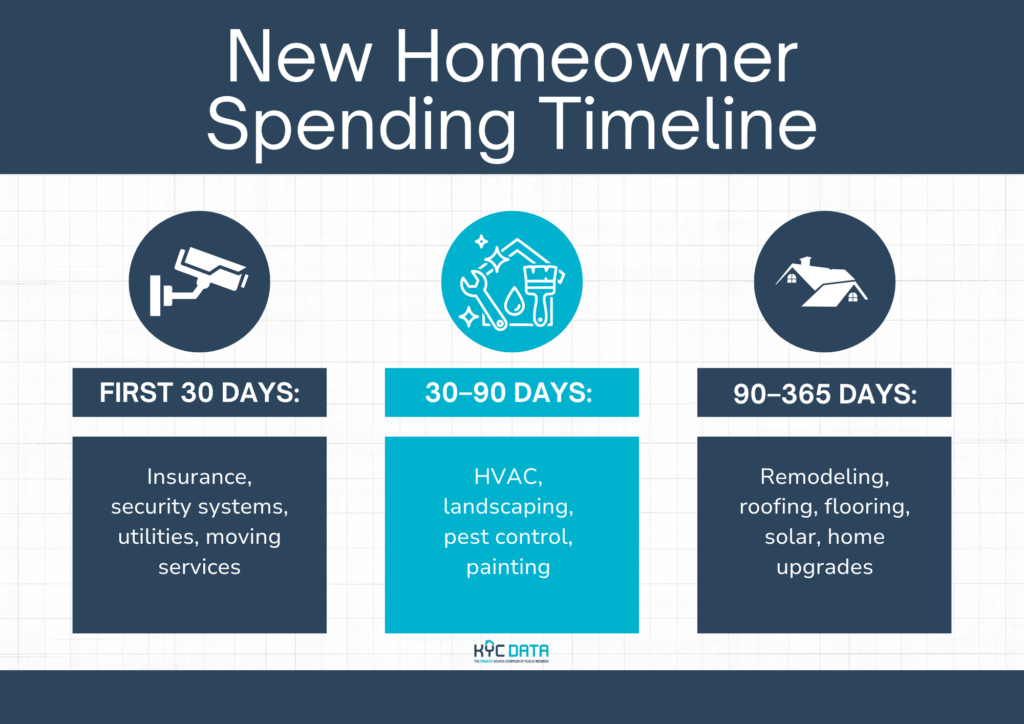
What New Homeowners Typically Buy During Their First Year
New homeowners often make purchases across several categories during their first year of ownership.
Insurance
Insurance is one of the first priorities after a home purchase.
Common purchases include:
- Homeowners insurance
- Flood insurance
- Umbrella policies
- Life insurance updates
- Property protection coverage
Insurance companies frequently use homeowner acquisition data and recent homebuyer data because policy decisions often happen immediately after closing.
Home Services
Many homeowners need ongoing services soon after moving in.
Common examples include:
- HVAC maintenance
- Pest control
- Landscaping
- Lawn care
- Pool service
- Plumbing services
A homeowner may not have existing relationships with local providers yet. That creates an opportunity for businesses using direct mail data and new homeowner marketing campaigns.
Home Improvements
Home improvement spending is also common during the first year.
Typical projects include:
- Remodeling
- Painting
- Flooring replacement
- Roofing
- Kitchen upgrades
- Bathroom renovations
Harvard’s Joint Center for Housing Studies has reported consistent growth in home improvement spending tied to recent home purchases and remodeling activity.
Home Products
Many new homeowners also purchase products and equipment after moving.
Examples include:
- Furniture
- Appliances
- Security systems
- Smart home devices
- Home décor
- Outdoor equipment
Because these purchases happen within a relatively short time window, businesses often prioritize fresh homeowner records instead of older lists.
The Importance of the First 90 Days
The first 90 days after a home purchase are often the most active period for homeowner spending and vendor selection.
During this time, homeowners are:
- Evaluating local service providers
- Setting maintenance schedules
- Purchasing home products
- Comparing insurance options
- Planning upgrades
This is why timing matters so much in new homeowner marketing.
A delayed campaign may reach a homeowner after decisions have already been made. An early campaign has a better chance of being considered during the decision process.
KYC Data updates new homeowner records daily and adds more than 45,000 new records weekly, helping businesses reach homeowners while decisions are still being made.
Daily updated property deed records also help reduce lag time between the home purchase and campaign delivery.
Request a Free Data Sample to see fresh homeowner records available for your market.
Why Timing Often Matters More Than Audience Size
Many marketers assume that a larger audience automatically produces better results. In practice, timing is often more important than volume.
A smaller list built from fresh, verified records may outperform a larger outdated list because the audience is more relevant.
For example:
- A campaign mailed 20 days after a home purchase may reach homeowners while they are actively choosing providers.
- A campaign mailed six months later may arrive after those relationships are already established.
This directly affects:
- Response rates
- Campaign efficiency
- Wasted mail volume
- Customer acquisition costs
Businesses using stale lists often spend more money reaching homeowners who are no longer in an active buying window.
Fresh, daily updated homeowner data helps improve relevance and reduce wasted outreach.
Industries That Benefit Most From New Homeowner Data
Several industries consistently benefit from New Homeowner Data because their services align closely with homeowner needs.
Insurance
New homeowners often review coverage immediately after moving. Insurance companies use homeowner leads and homeowner marketing data to reach buyers during this evaluation period.
Landscaping
Many homeowners invest in curb appeal and outdoor maintenance during their first year.
Solar
Solar companies target homeowners who are planning long-term property investments and energy upgrades.
HVAC
HVAC companies often market maintenance plans, inspections, and system replacements shortly after move-in.
Pest Control
Pest control services are commonly purchased during the first months of ownership, especially in warmer climates.
Roofing
Roofing companies use direct mail targeting to reach homeowners evaluating repair or replacement projects.
Security
Security companies benefit from early outreach because many homeowners install systems soon after moving.
Home Improvement
Remodeling and renovation companies frequently target recent buyers who want to personalize their homes.
Each of these industries benefits from strong timing and accurate direct mail data.
How Daily Updated Homeowner Data Improves Marketing Performance
Daily updated homeowner data improves campaign performance by increasing relevance and reducing delays.
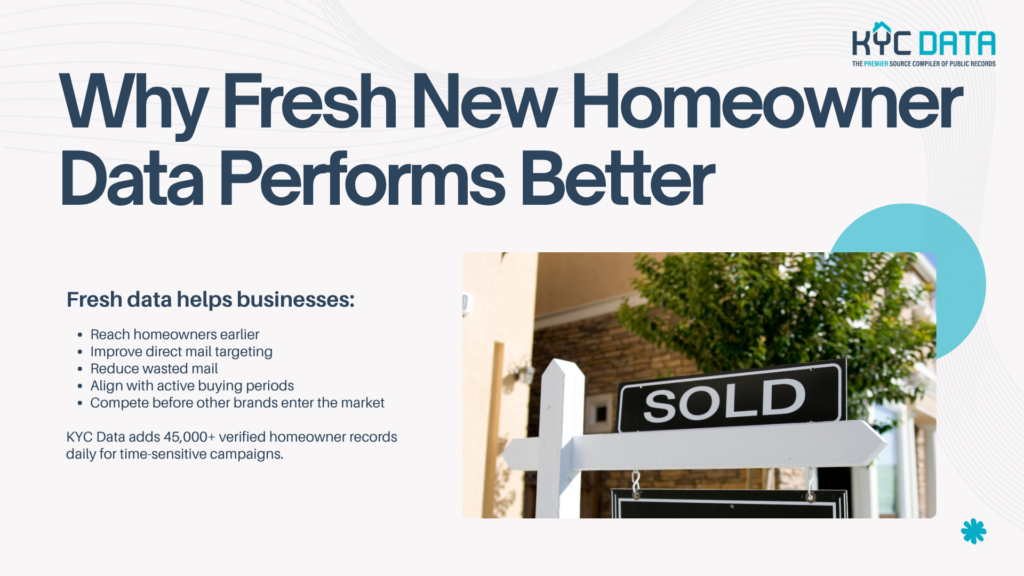
Fresh records allow businesses to:
- Reach homeowners sooner
- Align campaigns with buying activity
- Improve targeting efficiency
- Reduce wasted spend
KYC Data adds more than 45,000 new homeowner records weekly through verified property deed records and daily update cycles.
This helps businesses avoid common problems associated with older lists, including:
- Delayed outreach
- Reduced intent
- Lower response rates
- Duplicate records
- Outdated information
Verified deed-based sourcing also improves confidence in the accuracy of the data.
For marketers running acquisition campaigns, freshness can directly affect how relevant the message feels when it reaches the homeowner.
This is especially important for businesses using new homeowner mailing lists in competitive industries where multiple providers are trying to reach the same household.
Common Mistakes Marketers Make When Targeting New Homeowners
One of the biggest mistakes marketers make is waiting too long to launch campaigns.
By the time older lists arrive, homeowners may have already:
- Chosen service providers
- Purchased insurance
- Started renovation projects
- Installed security systems
Another common mistake is prioritizing list size over timing.
Large outdated lists may appear attractive because of volume, but freshness often matters more than audience size.
Other mistakes include:
- Using stale lists
- Mailing months after purchase
- Ignoring update frequency
- Failing to verify record sources
Businesses using fresh, daily updated homeowner acquisition data generally have a stronger starting point for direct mail campaigns.
Turning New Homeowners Into Long Term Customers
The first purchase is often only the beginning of the customer relationship.
A homeowner who hires a landscaper may later need irrigation services, seasonal maintenance, or outdoor upgrades. A homeowner who buys insurance may later expand coverage or add additional policies.
This is why many businesses view new homeowner marketing as both an acquisition strategy and a long-term growth opportunity.
The earlier a business builds trust with a homeowner, the greater the chance of repeat business and referrals.
Using fresh, verified New Homeowner Data helps businesses connect with customers while those relationships are still forming.
Conclusion
New homeowners spend more during their first year because they are actively building, maintaining, protecting, and improving a new property. This creates one of the strongest consumer buying windows available for direct mail and acquisition campaigns.
The timing of outreach plays a major role in campaign performance. Businesses using fresh, daily updated homeowner records can often reach buyers while purchasing decisions are still being made.
KYC Data supports this process with verified property deed sourcing, daily updates, and more than 45,000 new homeowner records added every week.
Get a Free Data Sample and see how daily updated new homeowner data can help you reach buyers when they are most likely to spend.