
The first year after buying a home represents one of the most important opportunities for businesses trying to connect with homeowners. The new homeowner marketing timeline is not about reaching someone once after closing—it is about understanding how priorities change as homeowners settle in, personalize their space, and invest in their property.
Quick answer: The first year of homeownership is often when homeowners make many purchasing decisions, from insurance and moving services to landscaping, remodeling, furniture, and long-term home improvements. Understanding this timeline helps businesses deliver more relevant marketing at the right stage of the homeowner journey.
Many marketers focus only on the closing date, but the homeowner buying journey continues for months afterward. By aligning offers with the homeowner lifecycle, businesses can create more effective campaigns through better direct mail timing and more relevant messaging.
Why the First Year Matters So Much
Buying a home is a major life transition that creates new needs, new expenses, and new opportunities for service providers. During the first year of homeownership, many buyers are learning their property, identifying priorities, and deciding where to spend their time and money.
Homeowners often move through several phases: immediate necessities after moving in, personalization projects, repairs, upgrades, and long-term investments. Their decisions depend on factors such as budget, home condition, family size, geographic location, and personal priorities.
For marketers, this period is valuable because homeowners are actively establishing relationships with insurance providers, contractors, home improvement companies, and local service businesses. Understanding homeowner purchasing behavior allows companies to move beyond generic promotions and create campaigns that match real customer needs.
Month 1: Immediate Needs After Closing
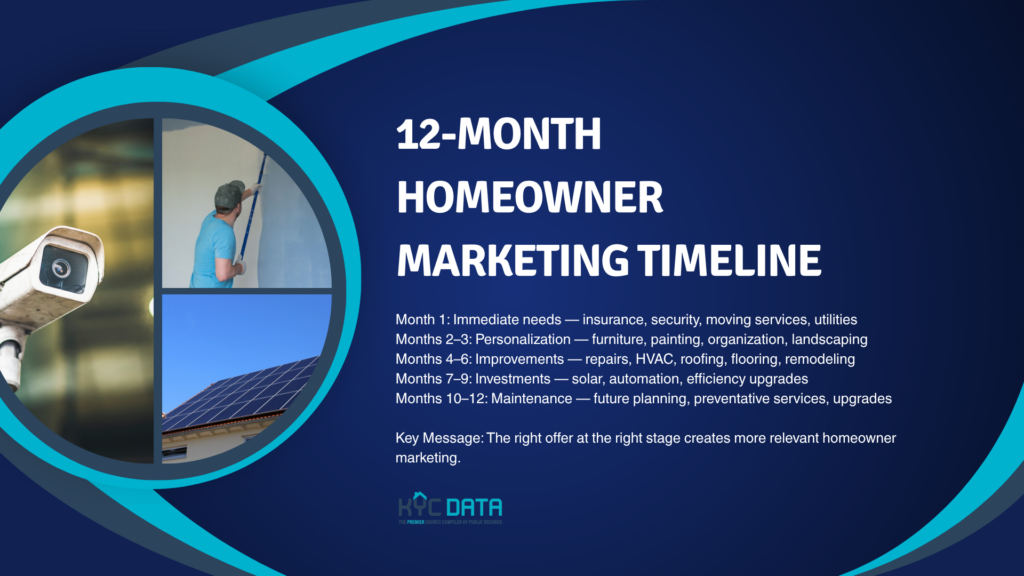
The first month after closing is typically focused on settling in and handling urgent priorities. Many homeowners are managing moving logistics, updating records, and making sure their new property is secure and functional.
Common early purchases may include:
● Homeowners insurance updates or policy reviews
● Security systems
● Furniture
● Moving services
● Utility setup
● Cleaning services
● Flooring
This stage is ideal for businesses offering solutions that help homeowners transition smoothly. Insurance agencies, security companies, cleaning services, and essential home providers can benefit from reaching homeowners while these needs are still immediate.
For marketers, new homeowner data helps identify buyers shortly after a property transaction occurs, creating an opportunity to deliver timely messaging instead of waiting until the homeowner has already selected a provider.
Months 1–3: Making the House Feel Like Home
After immediate move-in tasks are complete, many homeowners begin focusing on comfort, organization, and personalization. The house becomes less about simply moving in and more about creating a space that reflects their lifestyle.
During this stage, homeowners may consider:
● Furniture purchases
● Window treatments
● Closet systems
● Interior painting
● Landscaping
● Pest control
● Organization products
This is where new mover marketing and home services marketing strategies become especially important. A homeowner who has finished unpacking may now be more receptive to offers that improve appearance, comfort, and functionality.
A furniture retailer, flooring company, landscaping provider, or window treatment business can create stronger engagement by matching messaging to this personalization phase rather than promoting services too early.
Months 4–6: Repairs, Upgrades, and Improvements
After several months of living in a property, homeowners often notice issues that were not obvious during the buying process. Small repairs, maintenance concerns, and improvement ideas can become larger priorities.
Common projects during this phase may include:
● Roofing evaluations
● HVAC maintenance
● Flooring upgrades
● Kitchen updates
● Bathroom remodeling
● Outdoor living improvements
● Pool enhancements
Depending on the home’s age and condition, these needs can vary significantly. A newer home may require fewer repairs, while an older property may create immediate renovation opportunities.
This stage is especially relevant for contractors and home improvement companies. By using fresh homeowner data and aligning outreach with the homeowner lifecycle, businesses can reach prospects when improvement decisions are becoming more likely.
Months 7–9: Long-Term Investments
Once homeowners feel established, they often begin considering larger projects designed to improve efficiency, comfort, and property value.
Examples include:
● Solar installations
● Impact windows
● Home automation
● Garage storage solutions
● Major remodeling
● Outdoor kitchens
These projects usually require more planning, research, and financial consideration. The homeowner is no longer simply reacting to move-in needs—they are thinking strategically about the future of their property.
For solar companies, remodeling contractors, and national home improvement brands, this stage represents an opportunity to educate homeowners and build relationships before purchase decisions are finalized.
Months 10–12: Preparing for the Future
Near the end of the first year, homeowners often shift from moving in to maintaining and improving their investment. They begin planning recurring services and future projects.
Potential needs include:
● Annual maintenance services
● Insurance reviews
● Landscaping upgrades
● Holiday preparation
● Preventative repairs
● Next-year improvement planning
At this point, marketers can focus on retention and long-term relationships. A homeowner may not need every service immediately, but a well-timed message can place a brand in consideration when the need appears.
The homeowner purchasing journey continues beyond the first year, but the first twelve months provide many important opportunities for targeted communication.
Why Campaign Timing Is Just as Important as Audience Selection
Finding homeowners is only one part of successful marketing. Reaching the right audience with the wrong message at the wrong time can reduce campaign effectiveness.
For example:
● A solar offer immediately after closing may compete with more urgent move-in expenses.
● A landscaping campaign before homeowners have unpacked may feel premature. ● A kitchen remodeling promotion during move-in week may not match current priorities.
The most effective direct mail marketing strategies recognize that homeowner needs evolve. A campaign calendar built around homeowner behavior is more relevant than a single generic mailing sent to every new buyer.
This is why direct mail timing matters as much as audience selection. Businesses that understand when homeowners are likely to consider certain purchases can create better campaigns with stronger relevance.
Using Fresh Homeowner Data to Reach Buyers at the Right Time
Successful homeowner marketing depends on accurate and timely information. Reaching someone months after a purchase decision window has passed can limit campaign impact.
KYC Data helps businesses build smarter campaigns using:
● Fresh homeowner data
● Verified deed information
● Daily updates
● USPS NCOA processing
● CASS-certified address validation
● Pre-scrubbed mailing lists
● Campaign-ready data
Reliable data allows marketers to identify homeowners closer to the events that trigger purchasing decisions. Whether targeting someone in the first month after closing or building a year-long campaign strategy, accurate information improves the ability to deliver relevant offers.
Businesses should also prioritize data quality through practices discussed in resources such as “How Is Property Data Verified?”, “Fresh vs. Aged Data: What Actually Impacts Campaign Results,” and “The Importance of Data Hygiene in Direct Mail Marketing.”
Turning a Timeline Into a Marketing Strategy
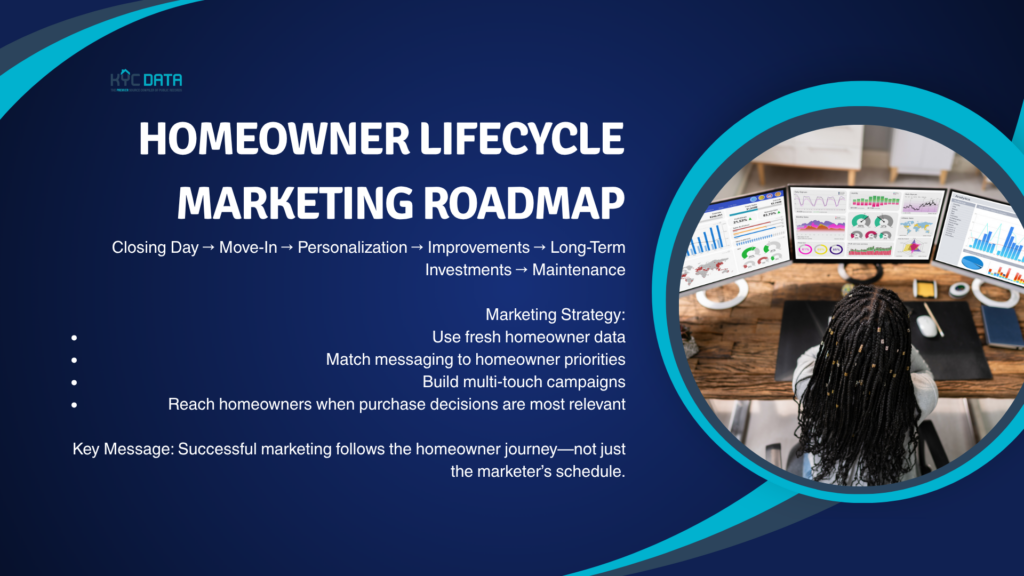
The best new homeowner marketing campaigns do not rely on one message delivered once. They follow the customer journey with multiple relevant touchpoints.
A stronger strategy may include:
● Early campaigns for immediate homeowner needs
● Mid-year campaigns focused on improvements
● Long-term campaigns for upgrades and maintenance
● Consistent messaging across channels
A multi-touch approach helps businesses stay connected as homeowner priorities change. Marketers should think beyond their own calendar and instead build campaigns around the homeowner lifecycle.
Resources such as “Why Multi-Touch Direct Mail Campaigns Outperform One-Time Mailings,” “Why Timing Beats Volume in Direct Mail,” and “Direct Mail Best Practices for Targeting New Homeowners” provide additional guidance for creating effective campaigns.
Conclusion: Building a Smarter New Homeowner Marketing Timeline
Homeowners do not stop making purchasing decisions after closing day. Their needs continue to evolve throughout the first year, creating multiple opportunities for businesses to connect through timely, relevant marketing.
A successful new homeowner marketing timeline recognizes that different services become valuable at different stages. Insurance, security, furniture, repairs, remodeling, and maintenance all have their own ideal moments for outreach.
If your business relies on reaching homeowners at the right time, KYC Data can help. Our fresh, verified new homeowner records include deed-verified information, multiple-source matching, USPS NCOA processing, CASS-certified address validation, and human-reviewed quality control to help you build smarter direct mail campaigns. Whether you are targeting homeowners in their first month or planning a full-year strategy, our campaign-ready data provides the foundation to reach the right audience with confidence.
Common Misconceptions About New Homeowner Marketing
“Homeowners make all purchases immediately after moving.” Many purchases happen gradually as homeowners discover needs and priorities over time.
“Every homeowner follows the same buying timeline.”
Purchasing patterns vary based on budget, property condition, location, and personal goals.
“One mailing is enough.”
A multi-touch approach often provides more opportunities to connect as needs change.
“Timing does not matter if the offer is good.”
Even a strong offer may underperform if it does not match the homeowner’s current priorities.
“Homeowner data stays fresh indefinitely.”
Data becomes less valuable over time, making fresh and verified records essential.
FAQ
What do new homeowners buy first?
Many homeowners first prioritize immediate needs such as insurance, security services, moving support, utilities, cleaning, and essential household supplies. After settling in, they often move toward furniture, organization, improvements, and maintenance services.
How long is someone considered a new homeowner?
From a marketing perspective, the first 12 months are often the most active period because homeowners are making many decisions about their property. However, purchasing behavior varies from person to person.
When should businesses market to new homeowners?
The ideal timing depends on the product or service. Insurance and security offers may fit early stages, while remodeling, solar, and larger improvements may perform better later in the homeowner lifecycle.
Why is fresh homeowner data important?
Fresh, verified data helps marketers reach homeowners closer to key purchasing windows. Accurate records improve campaign timing and reduce wasted outreach.
Should marketers use one campaign or multiple campaigns?
Multiple campaigns usually allow businesses to match messaging with changing homeowner needs. A multi-touch strategy can support stronger relationships throughout the homeowner journey.