
New homeowners are one of the most valuable audiences in direct mail marketing because their needs change quickly after a home purchase. The mistake many marketers make is treating all homeowners as the same, even though their buying behavior shifts across the first year of ownership. Understanding this timing is what turns general outreach into relevant campaigns.
This is where New Homeowner Data becomes important. It helps businesses reach people at the right stage of the homeowner lifecycle using fresh, daily updated homeowner records. KYC Data adds over 45,000 new homeowner records weekly, and these records are updated daily using verified property deed records.
Get a Free Data Sample to see newly updated homeowner records in your target market and evaluate how timing impacts your campaigns.
Why the First Year of Homeownership Matters
The first year after buying a home is when most major purchasing decisions happen. A home purchase triggers a chain of spending across protection, maintenance, upgrades, and long-term improvements.
Homeowners are actively setting up their property and choosing service providers they will likely use for years. This creates multiple opportunities for new homeowner marketing campaigns that rely on timing, not just audience size.
During this period, spending is concentrated in four areas:
- Protecting the home
- Maintaining systems and structure
- Improving appearance and function
- Personalizing the property
This makes recent homebuyer data one of the most responsive segments in homeowner mailing lists and direct mail data campaigns.
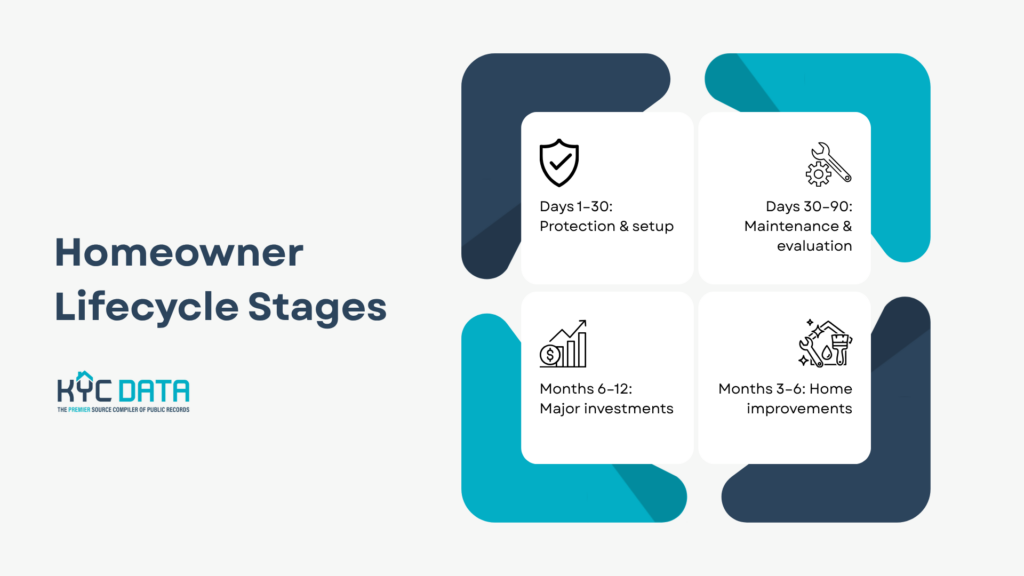
Days 1–30: Protection and Immediate Needs
The first 30 days are focused on security and setup. Homeowners are adjusting to a new property and prioritizing protection.
- Insurance
- Homeowners insurance
- Flood insurance
- Umbrella policies
- Security Systems
- Alarm systems
- Security cameras
- Monitoring services
- Locksmith Services
- Rekeying locks
- Lock replacement
- Internet and Utilities
- Service setup and transfers
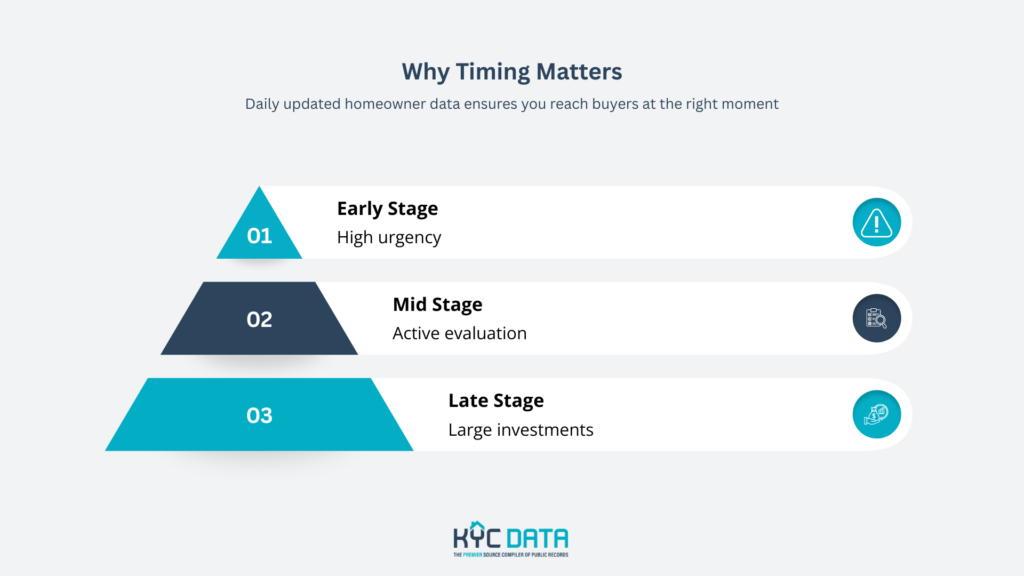
At this stage, urgency is high. Homeowners want immediate protection and stability. Property deed records help identify these new moves early so businesses can reach customers during this high-intent window.
Days 30–90: Maintenance and Property Evaluation
After the initial move-in period, homeowners begin evaluating the condition of the property. They shift from setup to maintenance.
- HVAC
- Inspections
- Maintenance plans
- System replacements
- Pest Control
- Preventative treatments
- Regular service plans
- Pool Services
- Cleaning and repairs
- Lawn Care
- Basic maintenance and upkeep
This is a key window where homeowners start identifying issues they did not notice during purchase. Businesses using fresh homeowner records in their direct mail targeting often see stronger engagement here because needs become more visible.
Request a Free Data Sample to reach homeowners during the critical first 90 days after purchase.
Months 3–6: Home Improvement Decisions Begin
Once homeowners are settled, attention shifts to upgrades and personalization. These are often planned improvements that were delayed during the move.
- Painting
- Interior updates
- Exterior refresh
- Flooring
- Replacement or refinishing
- Kitchen Updates
- Cabinet upgrades
- Fixture changes
- Bathroom Renovations
- Remodel projects
- Fixture improvements
- Window Treatments
- Blinds and coverings
This stage is driven by comfort and personalization. Homeowners begin investing in changes that reflect their preferences. New homeowner marketing campaigns often perform well here because intent is growing, even if purchases are not immediate.
Months 6–12: Larger Investments and Long-Term Planning
By this stage, homeowners are thinking about long-term value and larger upgrades. Financial planning becomes more structured.
- Roofing
- Repairs or replacement
- Solar
- Energy efficiency upgrades
- Major Remodeling
- Structural changes
- Room additions
- Outdoor Living Projects
- Decks and patios
- Home Automation
- Smart home systems
These are high-value services that benefit from direct mail targeting based on timing. Homeowners are now comfortable in the home and planning bigger investments.
Why Timing Impacts Direct Mail Performance
Timing is one of the most important factors in direct mail marketing. Even the best offer can fail if it reaches homeowners too early or too late.
Examples:
Sending a solar offer during move-in week may be too early.
Sending the same offer six months later aligns better with planning and budgeting.
Homeowners respond when the message matches their current needs. This is why marketing timing matters more than generic outreach.
How Daily Updated New Homeowner Data Creates a Competitive Advantage
The speed of outreach matters as much as the message itself. Businesses that reach homeowners earlier often have a stronger chance of becoming the first service provider they contact.
KYC Data supports this with:
- More than 45,000 new homeowner records added daily
- Daily updated homeowner records sourced from verified property deed data
- Reduced delay between purchase and outreach
This reduces the gap between when a homeowner buys a property and when marketing begins. In homeowner lifecycle campaigns, that timing advantage is critical.
Get a Free Data Sample and access daily updated homeowner records before your competitors do.
Common Mistakes Businesses Make When Marketing to New Homeowners
Many campaigns underperform because they ignore lifecycle timing.
Common mistakes include:
- Marketing too late after purchase
- Treating all homeowners the same
- Using outdated homeowner mailing lists
- Sending generic offers not tied to stage
- Ignoring buying behavior over time
These issues reduce the effectiveness of direct mail data and lead to wasted spend.
Building a Homeowner Lifecycle Marketing Strategy
A lifecycle approach helps businesses align offers with real homeowner behavior.
- Step 1: Identify your ideal homeowner stage
- Step 2: Match your service to the buying trigger
- Step 3: Use fresh homeowner data from verified sources
- Step 4: Launch campaigns quickly after data update
- Step 5: Measure response and refine timing
This approach turns new homeowner marketing into a structured system instead of a broad campaign.
By using fresh homeowner records, businesses can act within the most relevant time windows instead of relying on delayed data.
Conclusion
The homeowner lifecycle shows that timing shapes buying behavior more than audience size alone. Different industries benefit from different stages, from immediate protection needs to long-term renovation planning.
Success in direct mail targeting depends on reaching homeowners when demand is highest, not just when lists are largest. Using New Homeowner Data that is updated daily helps businesses stay aligned with real-world timing.
With more than 45,000 new homeowner records added weekly, marketers can reduce delays and improve relevance across campaigns.
Get a Free Data Sample and see how daily updated new homeowner data can help you reach homeowners at the right stage of their buying journey.