

Many marketers assume all new homeowner data is the same. In practice, campaign results often show the opposite. Two homeowner mailing lists can look similar in a spreadsheet but perform very differently once used in a live campaign.
The difference usually comes down to the quality of the records, not the category of data. Factors like freshness, verification, update frequency, and data hygiene all influence how well a list performs. These details affect delivery, timing, and overall campaign targeting.
This article explains why performance varies between lists, what drives stronger direct mail performance, and what to compare before choosing a provider. It also shows how better data creates a stronger starting point for any acquisition campaign.
Not All New Homeowner Data Is Collected the Same Way
Why do some homeowner data lists perform better than others? It often starts with how the data is collected.
Some providers build lists from verified property data, such as deed records filed at the county level. These records confirm that a property has changed ownership. This gives marketers a clear signal that a household is in a transition period.
Other homeowner mailing lists may rely on delayed sources or loosely aggregated data. These can include incomplete records or older entries that no longer reflect current ownership.
The source of the data affects:
● Accuracy of the homeowner record
● Timing of when the record becomes available
● Overall usability in a campaign
This means the performance gap between lists often begins before the campaign is even planned. Strong direct mail data starts with reliable collection methods.
Freshness Is One of the Biggest Performance Factors
How important is freshness in homeowner marketing data? It is one of the most important variables.
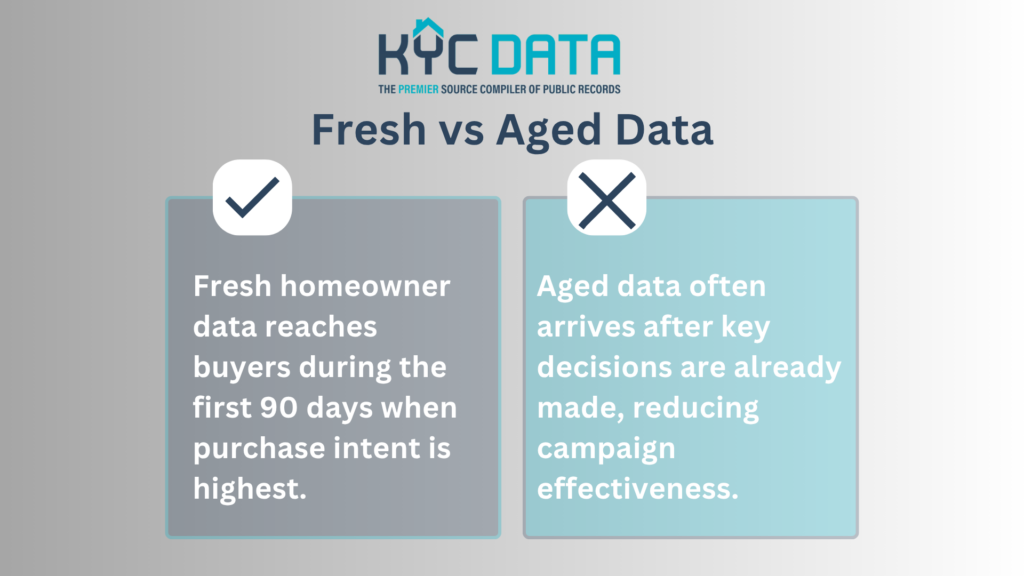
New mover data is most useful during the first 90 days after a home purchase. This is when households are actively making decisions about services, insurance, and home improvements. Timing matters because intent declines as those decisions are made.
Fresh homeowner data allows campaigns to align with that early activity. Older records may still be accurate, but they are often less relevant.
KYC Data adds over 45,000 new homeowner records daily. This supports campaigns that depend on current information rather than delayed updates.
A simple comparison shows the impact:
● Fresh data reaches households during active decision-making
● Aged data reaches households after key purchases are already made For direct mail targeting, freshness helps ensure the message arrives when it is still useful.
Verification Affects Trust, Deliverability, and Usefulness
What makes a homeowner mailing list accurate? Verification plays a key role.
Verified homeowner records are based on confirmed ownership changes. This reduces uncertainty and helps ensure the data reflects real households.
Strong records often include:
● Buyer name and gender
● Property address
● Seller name
● Sale price
● Dwelling type
● Delivery point barcode
Verification improves data accuracy and supports better deliverability. When records are consistent and complete, campaigns can be executed with fewer issues.
It also supports better personalization. Using correct names and property details helps avoid basic errors that can reduce trust in a mail piece.
Verification does not guarantee performance on its own, but it creates a more reliable foundation for campaign execution.
Data Hygiene Is Often the Hidden Difference Between Lists
What role does data hygiene play in campaign performance? It is often the deciding factor.
Data hygiene refers to how well a list is maintained. This includes:
● Removing duplicates
● Correcting formatting issues
● Filtering incomplete records
● Maintaining consistency across fields
A list can be recent but still perform poorly if it is not clean. Poor data hygiene can lead to:
● Wasted mail
● Inefficient campaign targeting
● Lower confidence in results
For example, duplicate records may cause multiple mail pieces to be sent to the same household. Incomplete records may reduce deliverability.
KYC Data focuses on data hygiene as part of its core process. This reflects its role as a data quality company rather than a basic marketing list provider.
Clean data supports stronger direct mail performance by reducing avoidable errors.
Better Lists Support Better Timing and Campaign Execution
How does list quality affect campaign execution? It goes beyond the data file itself.
Stronger homeowner mailing lists help marketers:
● Launch campaigns faster
● Segment audiences more effectively
● Align messaging with timing windows
● Reduce internal cleanup work
Clean, campaign-ready records allow teams to focus on strategy instead of fixing data issues. This is especially important in time-sensitive campaigns like new mover marketing.
For example, an agency running a landscaping campaign can segment by property type and sale price to refine its targeting. This level of detail supports better campaign targeting and more relevant messaging.
Better data improves execution by making the list easier to use in real campaign environments.
What Marketers Should Compare Before Choosing a Homeowner Data Provider
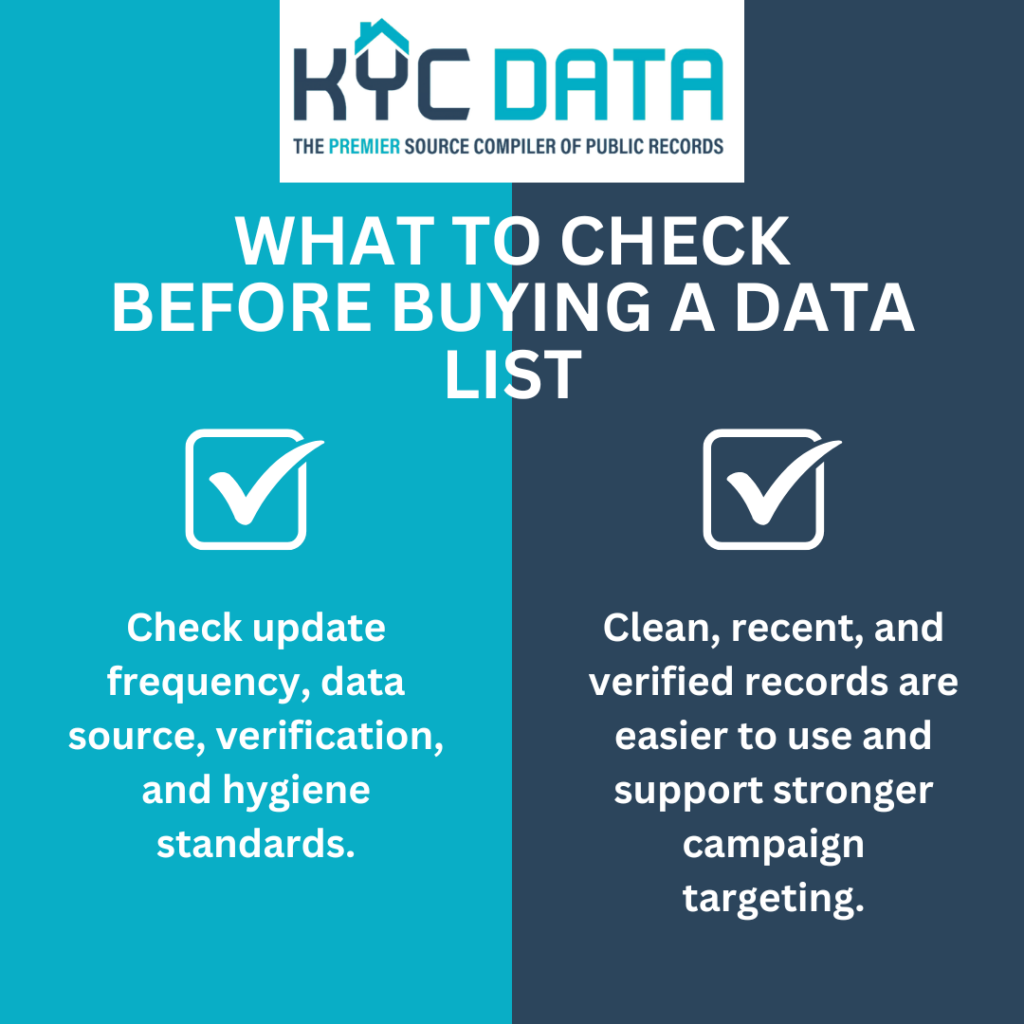
What should I compare before buying new homeowner data? Use a structured approach. Key factors to evaluate include:
1. Update Frequency
How often are records added? Daily updates support better timing.
2. Data Source
Are records based on verified property data such as deed filings?
3. Verification Process
Are records checked for accuracy and completeness?
4. Data Hygiene Standards
Are duplicates removed and fields standardized?
5. Fields Included
Does the list include useful details for segmentation?
6. National Coverage
Does the provider cover most of the United States where records are available?
7. Customer Support
Is help available for filtering, segmentation, or questions?
8. Sample Access
Can you review the data before committing?
These criteria help marketers compare marketing list quality without relying on assumptions.
A Better Performing List Usually Looks Better Before the Campaign Starts
How do I know if a data provider is reliable? There are early signs.
Higher-quality homeowner mailing lists often show:
● Clear documentation
● Complete and consistent fields
● Recent records
● Easy access to trial data
Marketers do not need to wait for campaign results to evaluate data quality. Reviewing a sample can reveal issues like missing fields or inconsistent formatting.
For example:
● A clean list may show consistent address formatting and recent transaction dates ● A weaker list may include incomplete records or unclear sourcing
This step helps reduce risk before launching a campaign.
Conclusion Regarding Homeowner Data Lists
One homeowner data list performs better than another because the records are not built to the same standard. Differences in freshness, verification, update frequency, and data hygiene all affect how useful the list will be in a real campaign.
Stronger new homeowner data supports better timing, cleaner execution, and more efficient campaign targeting. It helps reduce wasted spend and improves the starting point for any acquisition effort.
If you want to compare data quality before launching your next campaign, access free data from KYC Data or talk to a data expert about the audience you are trying to reach.
FAQ Regarding Homeowner Data Lists
Why do homeowner data lists perform differently?
They differ in freshness, source quality, verification, and data hygiene.
What makes new homeowner data more useful for campaigns?
Records that are recent, verified, and clean are easier to use for time-sensitive outreach.
How often should homeowner data be updated?
Daily updates support better timing for campaigns focused on new movers.
What should be included in a homeowner data record?
Useful records often include buyer name, property address, seller name, sale price, dwelling type, and delivery point barcode.
Can I evaluate data quality before buying?
Yes. Reviewing a sample helps assess freshness, structure, and usability.