
Many marketers focus on audience size, creative, or offer strategy when planning campaigns. But one factor is often overlooked: timing. The age of your data plays a major role in how relevant your campaign is when it reaches the audience.
Two campaigns can use the same type of audience and still perform very differently. The difference often comes down to how recent the records are. New homeowner data, for example, is highly time-sensitive. If it is used quickly, it aligns with real customer behavior. If it is delayed, the opportunity may already be gone.
This article explains the difference between fresh and aged data, how timing affects performance, and how to evaluate data freshness before launching a campaign.
What Is Fresh Data vs Aged Data?
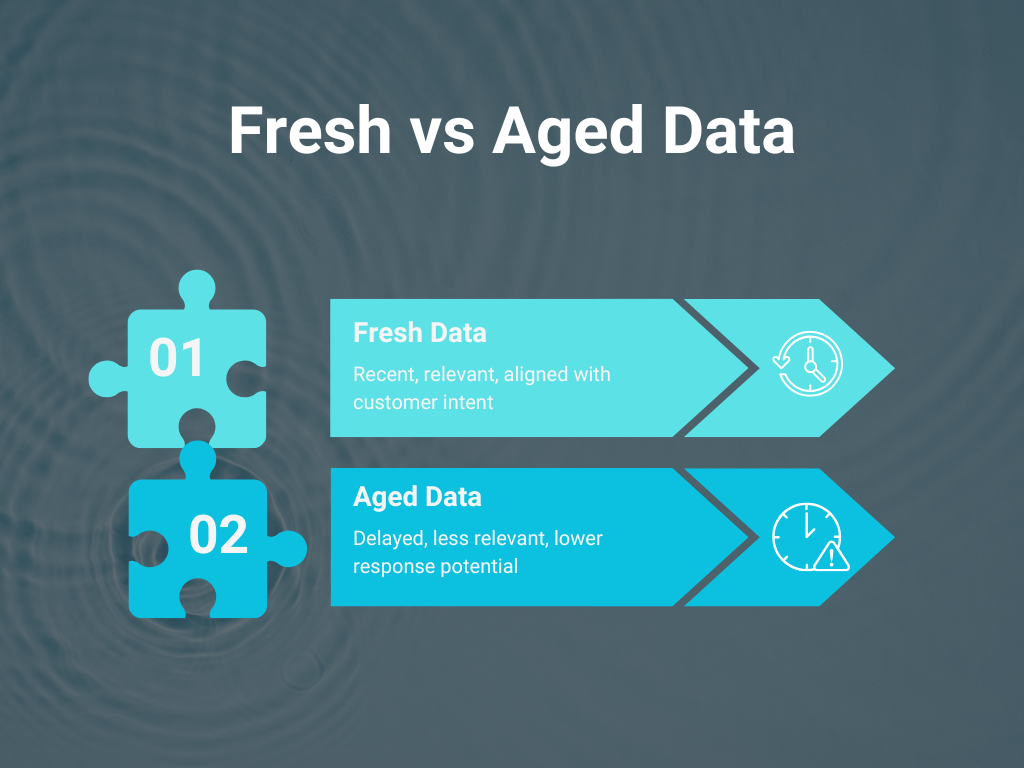
Fresh data refers to records that have been recently collected, processed, and delivered for use. Aged data refers to records that are older or delayed before they reach the marketer.
The difference between fresh data vs aged data is mainly about timing.
● Fresh data: Updated frequently, often daily or weekly
● Aged data: Updated less often, sometimes monthly or longer
Delays can happen at several points:
● Data collection from source records
● Processing and formatting
● Delivery to the end user
For example, if a homeowner record is collected but not delivered for several weeks, it becomes aged data before it is even used.
This timing gap is what affects data freshness and ultimately campaign performance.
Why Timing Matters in Marketing Campaigns
Timing plays a central role in how people respond to marketing. Most decisions happen within a specific window.
This is especially true for new mover data and homeowner outreach. Many homeowners make key decisions shortly after moving:
● Insurance selection
● Home service providers
● Renovation planning
The first 90 days after a home purchase are often the most active period. During this time, intent is high and decisions are being made.
If a campaign reaches someone during this window, it has a higher chance of being relevant. If it arrives later, the same message may no longer apply.
This is why timing in marketing is not just a detail. It directly affects whether the message connects with the audience.
How Fresh Data Aligns With Customer Intent
Fresh data performs better because it is closer to the event that triggered the opportunity. For example, when a homeowner has just moved:
● They are actively researching services
● They are open to new providers
● They are making purchasing decisions
Using fresh new homeowner data allows campaigns to reach people during this active phase.
KYC Data adds over 45,000 new homeowner records daily, which helps reduce the delay between a property transaction and marketing outreach.
This shorter gap improves alignment between the message and the customer’s current situation.
In simple terms:
● Fresh data = higher relevance
● Higher relevance = stronger engagement potential
This does not guarantee results, but it creates a better starting point for direct mail campaigns and other acquisition efforts.
What Happens When Data Is Delayed (Aged Data)
Aged data often leads to missed opportunities.
When records are delayed:
● The customer may have already made a decision
● The urgency of the situation may have passed
● Competitors may have already reached them
For example:
A homeowner who receives a solar offer 10 days after moving may still be evaluating options. The same offer delivered 60 days later may arrive after decisions have already been made.
This delay reduces the effectiveness of the campaign.
Aged data also increases competition. By the time outreach happens, multiple brands may already be in the mailbox.
The result:
● Lower response rates
● Reduced relevance
● Less efficient campaigns
This is why campaign timing is closely tied to data freshness.
Fresh Data vs Aged Data in Real Campaign Scenarios
The difference between fresh and aged data becomes clear in real-world campaigns.
Example 1: Insurance Campaign
Fresh data campaign: Targets homeowners within 2–3 weeks of moving Aged data campaign: Targets homeowners 60+ days after moving
In the first scenario, the homeowner is still evaluating insurance options. In the second, coverage may already be in place.
Example 2: Solar Outreach
Fresh campaign: Reaches homeowners early when they are planning upgrades Delayed campaign: Reaches homeowners after budgets have been allocated
Example 3: Home Services Marketing
Early outreach captures immediate needs such as pest control or landscaping Late outreach competes with existing providers
These examples show a consistent pattern:
● Early engagement = higher relevance
● Late engagement = reduced opportunity
This comparison highlights how direct mail data timing influences real outcomes.
How Data Freshness Affects Response Rates and Efficiency
Data freshness directly impacts key performance indicators.
Response Rates
Fresh records are more likely to reach people during active decision periods. This can support stronger response potential compared to aged lists.
Conversion Likelihood
When outreach aligns with intent, conversion becomes more likely. Delayed outreach often requires more effort to achieve the same result.
Campaign Efficiency
Fresh data reduces wasted spend on low-probability prospects. This improves how efficiently budgets are used.
Industry benchmarks show that direct mail response rates typically range between 2% and 5%, depending on targeting and timing. Campaigns that align with high-intent periods tend to perform closer to the higher end of that range.
This does not mean freshness guarantees better results, but it improves the conditions needed for performance.
How to Evaluate Data Freshness Before Using a List
Before using any homeowner mailing lists, it is important to evaluate how fresh the data is.
Checklist for Evaluating Data Freshness
Update frequency
How often is the data refreshed? Daily updates provide more current records than monthly updates.
Record recency
How quickly are new records delivered after they are created?
Data source
Is the data based on verified records such as deed filings?
Delivery timing
How long does it take to receive the data after ordering?
Processing delays
Are there additional steps that slow down availability?
A provider like KYC Data focuses on frequent updates and faster delivery cycles, which helps reduce delays between data creation and campaign use.
Evaluating these factors helps ensure that marketing data accuracy is supported by strong timing.
When Fresh Data Matters Most
Fresh data is especially important in time-sensitive campaigns.
New Homeowner Campaigns
The first 90 days after a move are critical. Fresh new homeowner data helps reach households during this period.
Mortgage and Financial Triggers
Refinancing and loan-related campaigns depend on recent activity.
Home Services and Upgrades
Services like roofing, solar, and landscaping often follow recent home purchases.
Acquisition Campaigns
When targeting new customers, timing affects how likely they are to engage.
In these cases, data freshness is not just helpful—it is central to campaign relevance.
Conclusion
Fresh data performs better than aged data because it aligns with current customer behavior and intent. When records are recent, campaigns are more likely to reach people at the right time.
Aged data, by contrast, introduces delays that reduce relevance and limit effectiveness. Even small timing gaps can impact how a campaign performs.
For marketers using new homeowner data, timing plays a direct role in campaign success. Prioritizing data freshness helps support better targeting, stronger alignment, and more efficient execution.
Contact KYC Data Today
If timing is critical to your campaigns, now is the time to see the difference for yourself. Get access to free data from KYC Data and see firsthand how fresher, faster-delivered records can improve targeting precision, increase response rates, and drive more efficient campaign performance. Instead of guessing whether your data is holding you back, put it to the test and evaluate the impact on your next campaign with real, high-quality records delivered when they matter most.
FAQ
What is fresh data in marketing?
Fresh data refers to recently updated records that reflect current customer activity and behavior.
Why does aged data perform worse?
Aged data often arrives after the key decision window, reducing relevance and response potential.
How often should data be updated?
For time-sensitive campaigns, daily or weekly updates provide stronger alignment with customer intent.
Does timing affect direct mail performance?
Yes. Campaign timing influences when a message reaches the audience, which affects relevance and response rates.
How can I verify data freshness?
Check update frequency, record recency, data source, and delivery timelines before using a list.